



How to Use Salesforce Marketing Cloud Engagement REST API

Salesforce Marketing Cloud Engagement’s REST API is the fastest way to automate the work you normally do by clicking around Email Studio, MobileConnect, Journey Builder, and Contact Builder. If you need to trigger sends, create or update Data Extension rows, retrieve tracking data, or orchestrate Journey entry from an external app, the REST API is the integration surface you’ll touch most often. Salesforce groups Marketing Cloud APIs into REST and SOAP and recommends REST for most modern integration patterns, while SOAP still shows up for some legacy objects and enterprise workflows – so knowing where REST fits (and where it doesn’t) prevents a lot of dead ends and rework how Marketing Cloud splits capabilities across REST and SOAP.
REST API in Marketing Cloud Engagement: what it covers (and what it doesn’t)
In practice, REST API work in Marketing Cloud Engagement falls into a few buckets:
- Auth and security: getting an access token, handling expiry, scoping to the right Business Unit.
- Data operations: CRUD-like interactions for Data Extensions and other data endpoints.
- Messaging and orchestration: triggering sends, injecting contacts into Journeys, managing assets where supported.
- Tracking and reporting: pulling event data and send outcomes.
Salesforce’s REST API overview makes a key point that shows up immediately when you build: you authenticate with installed packages and OAuth 2.0, then call REST resources using the base REST endpoint for your stack and tenant how Marketing Cloud REST endpoints are accessed after OAuth. That sounds simple, but it drives several real implementation decisions: where you store secrets, how you refresh tokens, and how you prevent “works in DEV, fails in PROD” surprises caused by wrong subdomain or Business Unit context.
Set up API access the way production systems expect
Create an Installed Package and choose scopes deliberately
A common issue is over-scoping during early testing, then later trying to lock things down and breaking calls. Trailhead’s API module walks through the practical model: an Installed Package represents your integration, and you add an API component (typically Server-to-Server) to get credentials and define permissions how Installed Packages define API permissions for integrations.
What typically happens in real teams:
- Developers request broad permissions “to move fast”.
- Security later asks for least-privilege.
- You discover which endpoints actually need which scopes only after you’ve wired the app.
So treat scopes as a design artifact. Document them alongside the endpoints you call.
Pick the right auth flow (Server-to-Server for most backend jobs)
Most backend services use Server-to-Server (client credentials) because it’s stable for scheduled jobs and middleware, while web-based user delegation patterns are a different fit why Server-to-Server is the typical Marketing Cloud API auth choice. That guidance matches what you see in production: nightly data syncs, triggered sends from order systems, and event-driven updates rarely want a human login in the middle.
Authenticate with OAuth 2.0 (and don’t ignore token lifecycle)
Marketing Cloud’s REST APIs start with an access token. The exact URL and payload depend on your tenant, but the mechanics are consistent: you exchange client credentials for a bearer token, then include that token in subsequent calls.
Example: request an access token (Server-to-Server)
curl --request POST
 --url "https://YOUR_SUBDOMAIN.auth.marketingcloudapis.com/v2/token"
 --header "Content-Type: application/json"
 --data '{
 "grant_type":"client_credentials",
 "client_id":"YOUR_CLIENT_ID",
 "client_secret":"YOUR_CLIENT_SECRET",
 "account_id":"YOUR_MID_OR_BU_ID"
 }'
Implementation notes that save time:
- Store `expires_in` and refresh before it lapses. Don’t wait for a 401 in the middle of a batch.
- Tie `account_id` strategy to your Business Unit model. If your integration writes to multiple BUs, you need a clear mapping.
Work with Data Extensions via REST (the integration “workhorse”)
If you do any serious Marketing Cloud integration, Data Extensions become your interchange format. The REST API is usually how external systems push customer attributes, event data, and segmentation inputs.
Practical pattern: upsert rows for event-driven personalization
A typical flow:
- Commerce or product app posts an event (cart updated, subscription changed).
- Middleware upserts a row in a Data Extension.
- Journey Builder reads the updated data when evaluating entry or decision splits.
To keep this stable:
- Use a deterministic primary key (SubscriberKey, ContactKey, or an internal ID).
- Maintain a strict schema contract (data types matter).
- Validate payload size and encoding.
Debugging reality: the platform won’t always tell you the “real” error
When calls fail, you’ll often end up searching community threads and patterns. The Marketing Cloud tag on Stack Overflow is full of cases where the API responds with a generic authorization or validation error, but the root cause is scope mismatch, wrong MID, or incorrect endpoint path for the tenant stack real-world troubleshooting patterns for Marketing Cloud API errors. In practice, build logging that captures:
- Full request URL (minus secrets)
- MID/account_id used
- Response body
- Correlation IDs if provided
It’s the difference between a 10 minute fix and a half day guessing session.
Trigger messaging and Journeys from REST without building fragile workarounds
Many teams start by “just calling the send endpoint” and then realize they also need:
- Idempotency (avoid double-sends)
- Proper audience qualification
- Personalization that matches what the email expects at send time
Marketing Cloud has multiple ways to initiate messaging. REST is excellent for system-to-system triggers, but the message content itself still depends on how you built the email, the data model, and the scripting runtime.
Personalization nuance: API payload vs send-time rendering
A frequent misconception is that pushing more data in the API call automatically makes the email smarter. In reality, your email’s personalization is usually evaluated at send time using subscriber attributes and Data Extension lookups, and the “right” place to compute logic depends on complexity and performance.
When AMPscript logic becomes too heavy, moving parts of personalization into JavaScript (SSJS) can handle more complex transformations while still running inside Marketing Cloud’s execution context why SSJS is used when AMPscript personalization gets too complex. Practically, that means your REST API can focus on sending clean, normalized data, and your template layer can compute advanced presentation logic without requiring upstream systems to assemble every string.
Combine REST API + SSJS + AMPscript for safer automation
A lot of real implementations end up hybrid:
- REST API pushes raw event data into a Data Extension.
- A Journey activity or script activity normalizes/enriches.
- AMPscript and SSJS render the final content.
A very practical approach is calling AMPscript functions from SSJS so you can reuse existing AMPscript logic while still benefiting from JavaScript control flow and error handling how SSJS can invoke AMPscript for reusable personalization logic. This is especially helpful when your REST API integration is stable, but the business keeps changing content rules weekly. You keep the integration steady and iterate in the template/runtime layer.
Example pattern: write event rows via API, then render with lookups at send time
Inside an email, you might do something like:
%%[
/* Example: lookup the latest preference or event flag */
SET @pref = Lookup("DE_Preferences","PreferenceValue","SubscriberKey", _subscriberkey)
IF Empty(@pref) THEN
 SET @pref = "default"
ENDIF
]%%
If you need to dynamically include reusable blocks (like legal text or modular product snippets), fetching stored snippets with AMPscript is a workable technique when you want centralized control without rebuilding emails using AMPscript to retrieve reusable code snippets at send time. That’s a clean complement to REST: the API updates the underlying data, and content stays modular.
Use SQL in Automation Studio to prep data the REST API shouldn’t compute
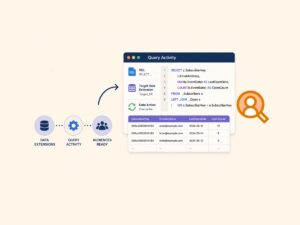
Teams often overuse the API for transformations that are cheaper inside Marketing Cloud. If you’re reshaping or filtering large datasets, SQL Query Activities are usually the right tool.
MartechNotes’ library of SQL examples reflects common Marketing Cloud patterns like deduping, selecting latest records, and joining Data Extensions to build targetable tables for journeys and sends practical SQL patterns for shaping Data Extension data. In practice, this lets your REST integration stay lean:
- API writes raw facts (events, preferences, statuses).
- SQL builds curated segments and “send-ready” tables.
- Journeys reference the curated tables.
That separation tends to reduce API call volume, lower latency sensitivity, and make failures easier to recover from.
Common REST API implementation pitfalls (and how to avoid them)
1) Confusing SOAP vs REST ownership of features
Salesforce is explicit that Marketing Cloud exposes functionality across REST and SOAP, and the split is not always intuitive if you come from core Salesforce APIs which API style covers which Marketing Cloud capabilities. When an endpoint you expect “should exist” doesn’t, confirm whether it’s SOAP-only or requires a different object model.
2) Treating personalization as an API-only concern
Personalization works best when data, automation, and content are designed together, not bolted on at the end why personalization depends on coordinated data and automation design.
Don’t jam computed content strings into your API payload if the template can compute them reliably from normalized attributes.

3) Underestimating monitoring and replay
Because REST calls often sit between systems, you need replayable, idempotent operations. Use an external event ID and store it in your Data Extension so you can detect duplicates. If a job retries after a timeout, you should not create multiple journey entries or send multiple messages.
4) Debugging without capturing tenant context
A large percentage of “it worked yesterday” failures are tenant or BU context problems: wrong subdomain, wrong account_id, or a package installed in one BU but used against another. Salesforce’s REST overview is clear that REST access is tied to the correct endpoints and auth context how OAuth context determines which REST resources you can access. Log the auth target and the REST base URL every time.
A practical blueprint: from external event to personalized email
Here’s a pattern that holds up under real load:
- External system emits event (order shipped, trial expiring, preference updated).
- Middleware authenticates using Server-to-Server and writes the event to a raw DE.
- Automation Studio SQL transforms raw into “latest state” and audience tables.
- Journey Builder listens to the curated DE or API-triggered entry.
- Email template uses AMPscript for straightforward lookups and SSJS for heavier conditional logic, calling AMPscript functions from SSJS where it keeps code reusable a hybrid approach to personalization logic inside Marketing Cloud.
That division of labor keeps the REST API doing what it’s good at: reliable data movement and orchestration, not brittle content assembly.