When you save links as part of an HTML code in an AMPScript variable, such as a paragraph containing a link to a page, you may face challenges in tracking these links.
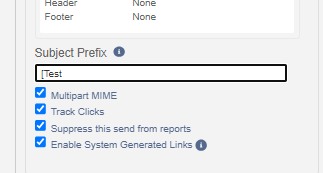
Salesforce offers a great feature that allows tracking of such links using the “httpgetwrap” inserted right before the URL protocol.
href="httpgetwrap|https://martechnotes.com"
When dealing with AMPScript variables containing links for tracking, it is crucial to use the TreatAsContent() function instead of the v() function. This way, both the link and the tracking will work seamlessly.
%%[
SET @note = "Lorem ipsum dolor sit amet, consectetur adipiscing elit. <a href='httpgetwrap|https://martechnotes.com'>Vestibulum</a> eu lorem vel tortor mattis convallis. Etiam vulputate pharetra varius.</p>
]%%

%%=TreatAsContent(@note)=%%
GOOD TO KNOW
One important aspect to take into account when utilizing the “httpgetwrap” feature is its limitation in tracking only the first 100 unique URLs in the send. If you combine the prefix with Parameter Manager, it’s highly improbable that the click activity on these prefixed links will be fully tracked.
There is no longer a requirement to contact support for enabling this feature, as was the case in the past. Nowadays, the feature is automatically enabled on business units.
There is no longer a requirement to contact support for enabling this feature, as was the case in the past. Nowadays, the feature is automatically enabled on business units.
I specialize in solving problems, automating processes, and driving innovation through major marketing automation platforms, particularly Salesforce Marketing Cloud and Adobe Campaign.
Not too long ago, Google reCAPTCHA officially became part of Google Cloud. If you’ve been using the older reCAPTCHA implementation, you might have noticed that it suddenly stopped working — without much warning. The migration introduced new endpoints, API keys ...
In today’s fast-paced digital world, businesses are constantly seeking innovative ways to boost their marketing efforts and enhance efficiency. As the owner of a marketing automation agency with over a decade of experience working for IT corporations—eight of which were ...
Maybe the title got you a bit curious because there is no such thing as adding indexes in Salesforce Marketing Cloud data extensions. But what can be done instead? If the indexes cannot be managed by the admins and cannot ...
Working with marketing automation platforms for almost a decade and over 6 with salesforce marketing cloud have taught me valuable lessons on how to approach problems we all face in our daily lives as marketing automation consultants. The first and ...
Marketing automation workflows are designed to run silently in the background. Once configured, they are supposed to move data, trigger messages, and orchestrate campaigns without constant supervision. At least in theory. In reality, every marketing automation consultant eventually experiences the ...
Querying shared data extensions has been a confusing topic for me, and I have changed my understanding of it several times. At one point, I believed shared DEs could not be queried at all, and later I found Salesforce resources ...
One innovative way to enhance engagement and provide value is by integrating iCalendar (.ics) events into your email campaigns. Whether you’re hosting webinars, conferences, or any significant event, offering a seamless way for recipients to add these events to their ...
Both Salesforce Marketing Cloud and Adobe Campaign Classic are powerful marketing automation platforms that offer a wide range of features to help businesses manage their marketing campaigns. The choice between these two tools ultimately depends on your specific business needs ...







 Platinum